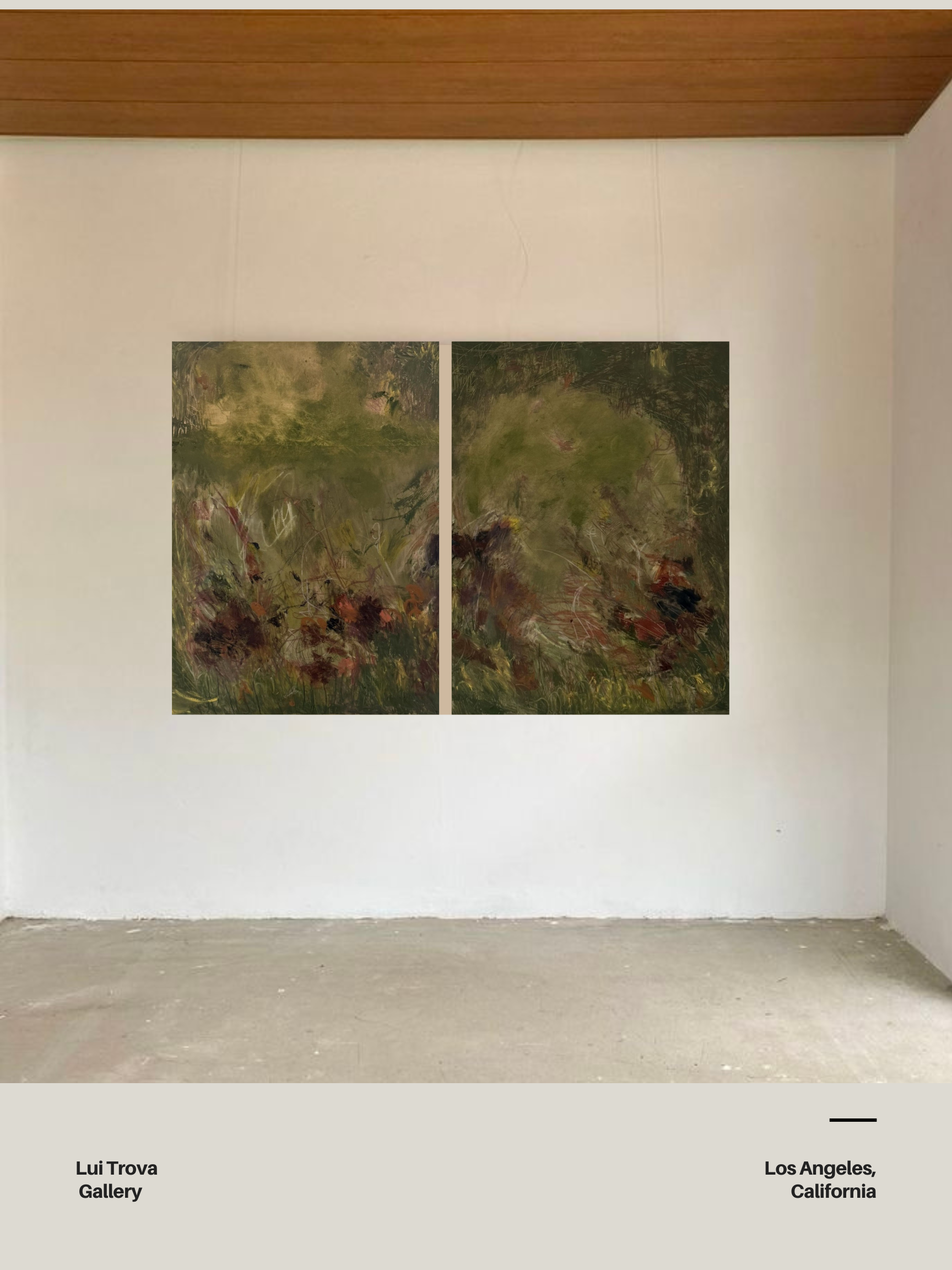
Tullis StudioEnclosure
Artist: MARY ANDREWS
Diptych, oil on canvas
Each panel: 30 × 40 in.
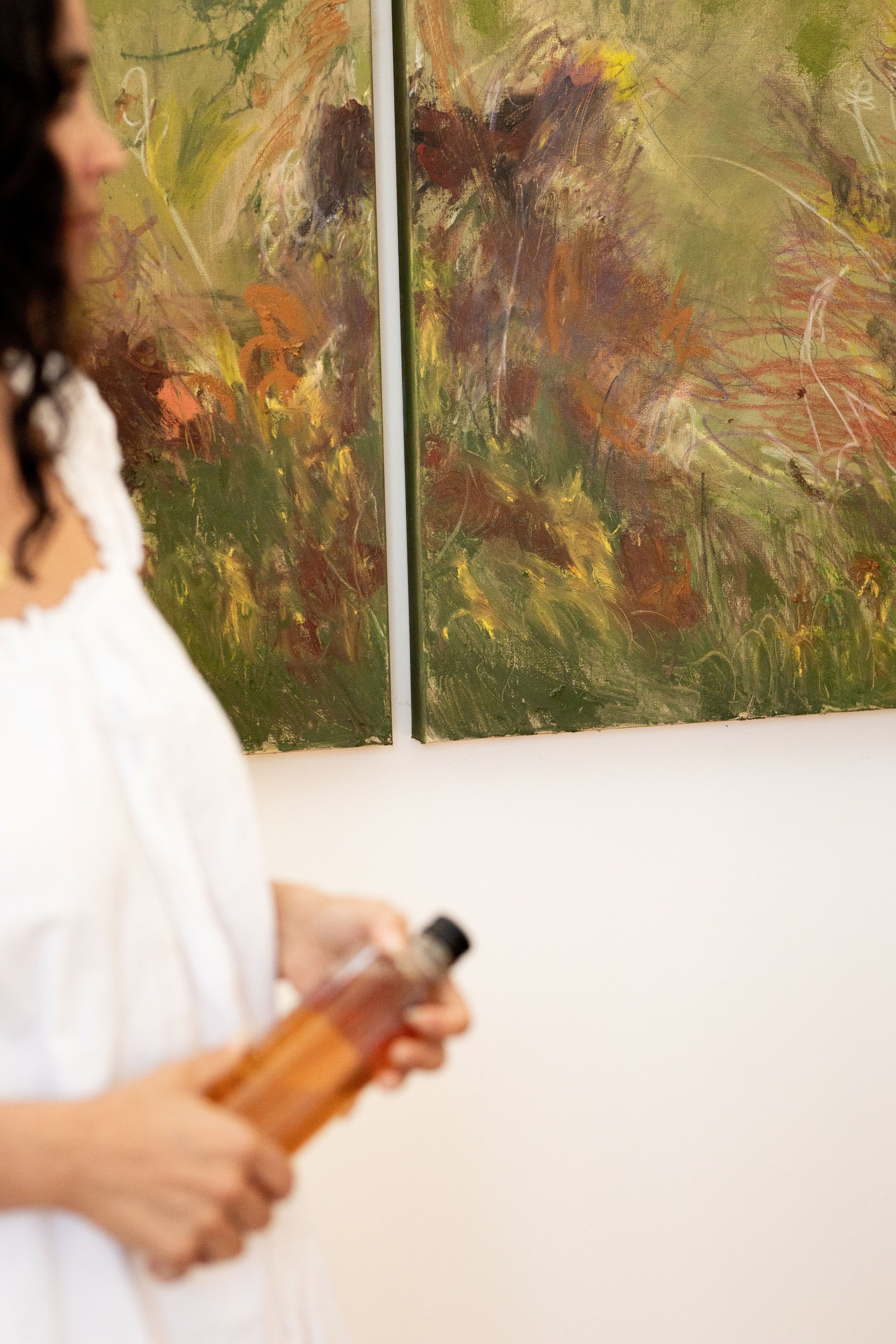
This diptych explores enclosure as a generative space rather than a defensive boundary. Layers of mossed greens and earthen pigments form a surrounding field that gathers inward, suggesting an interior landscape held within its own quiet architecture. The work reflects on the human impulse to create chambers of retreat — spaces where attention withdraws from the external world and settles into reflection. Here enclosure becomes a site of incubation: a temporary shelter in which thought, memory, and perception can reorganize before returning outward.
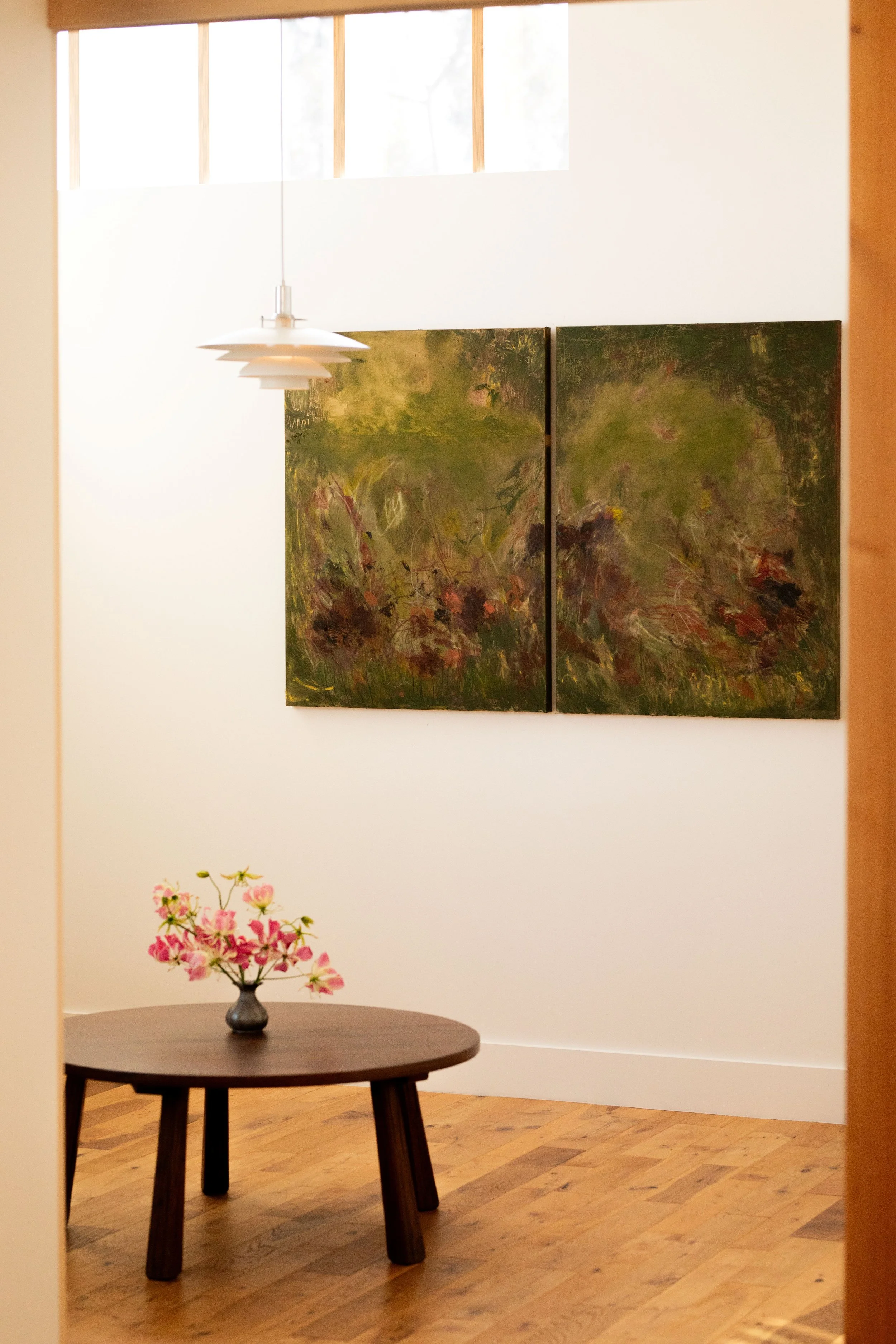
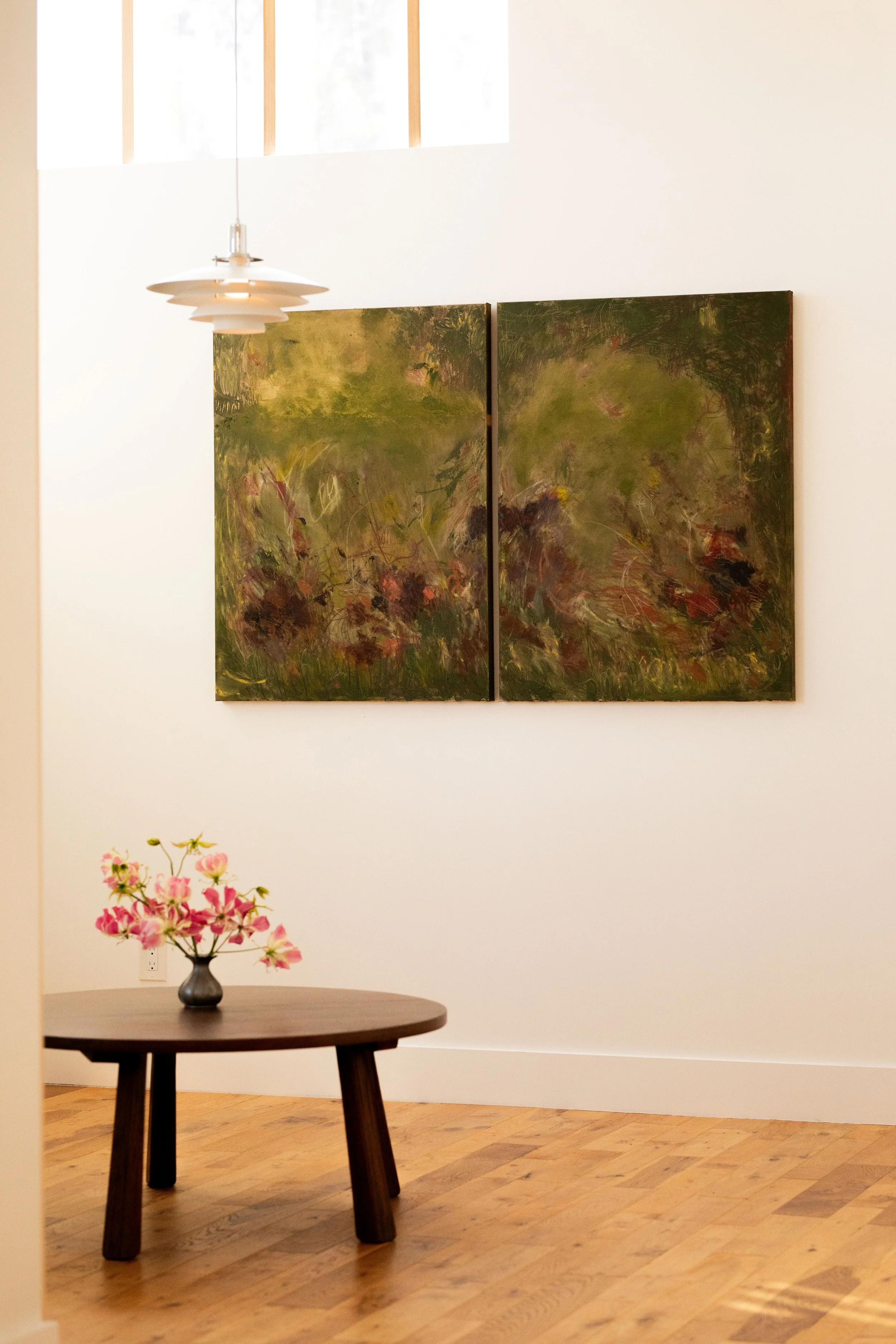
Title: Enclosure
Artist: MARY ANDREWS
2026
Oil, pastel on canvas, diptych
Each Panel: 30 × 40 in.
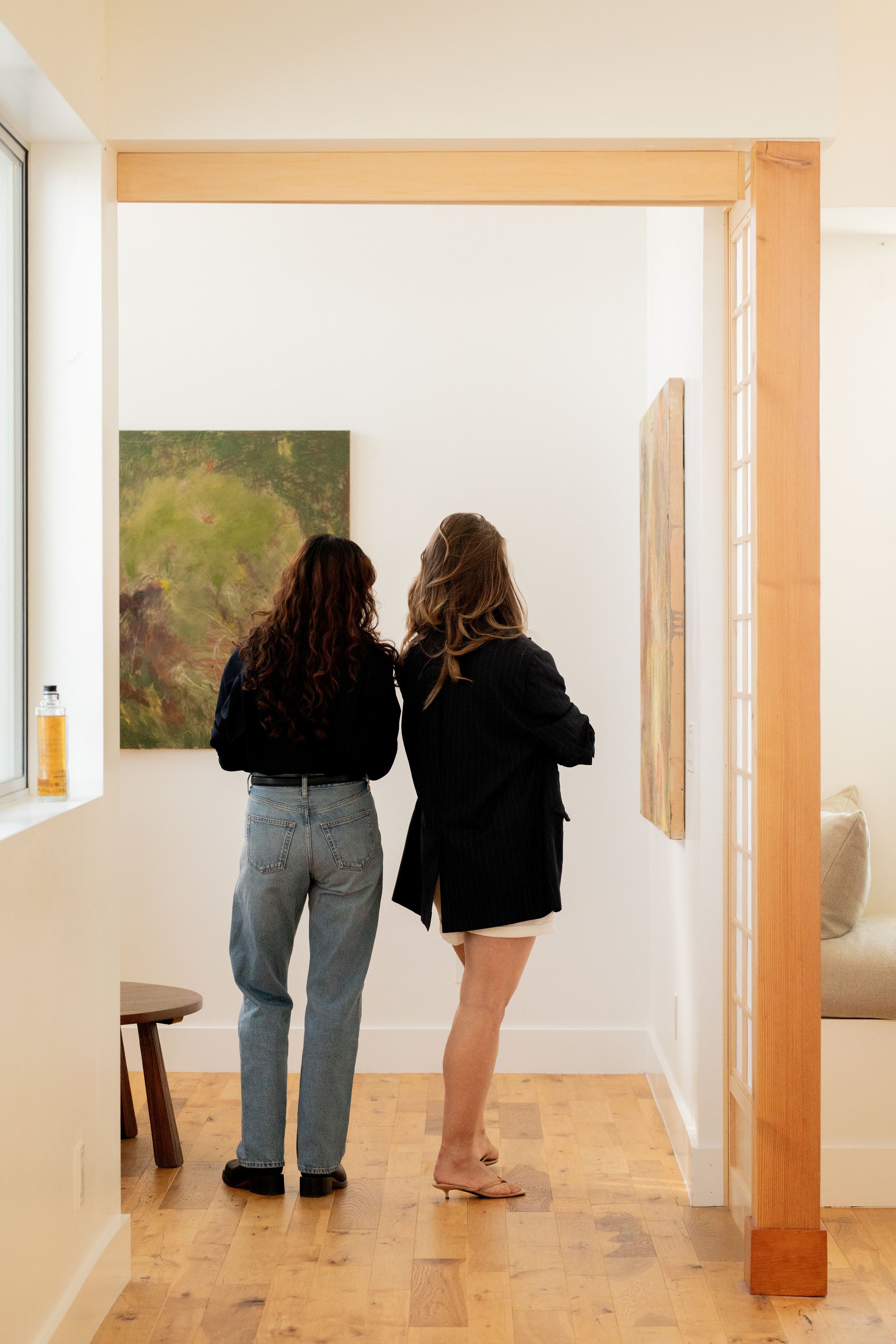
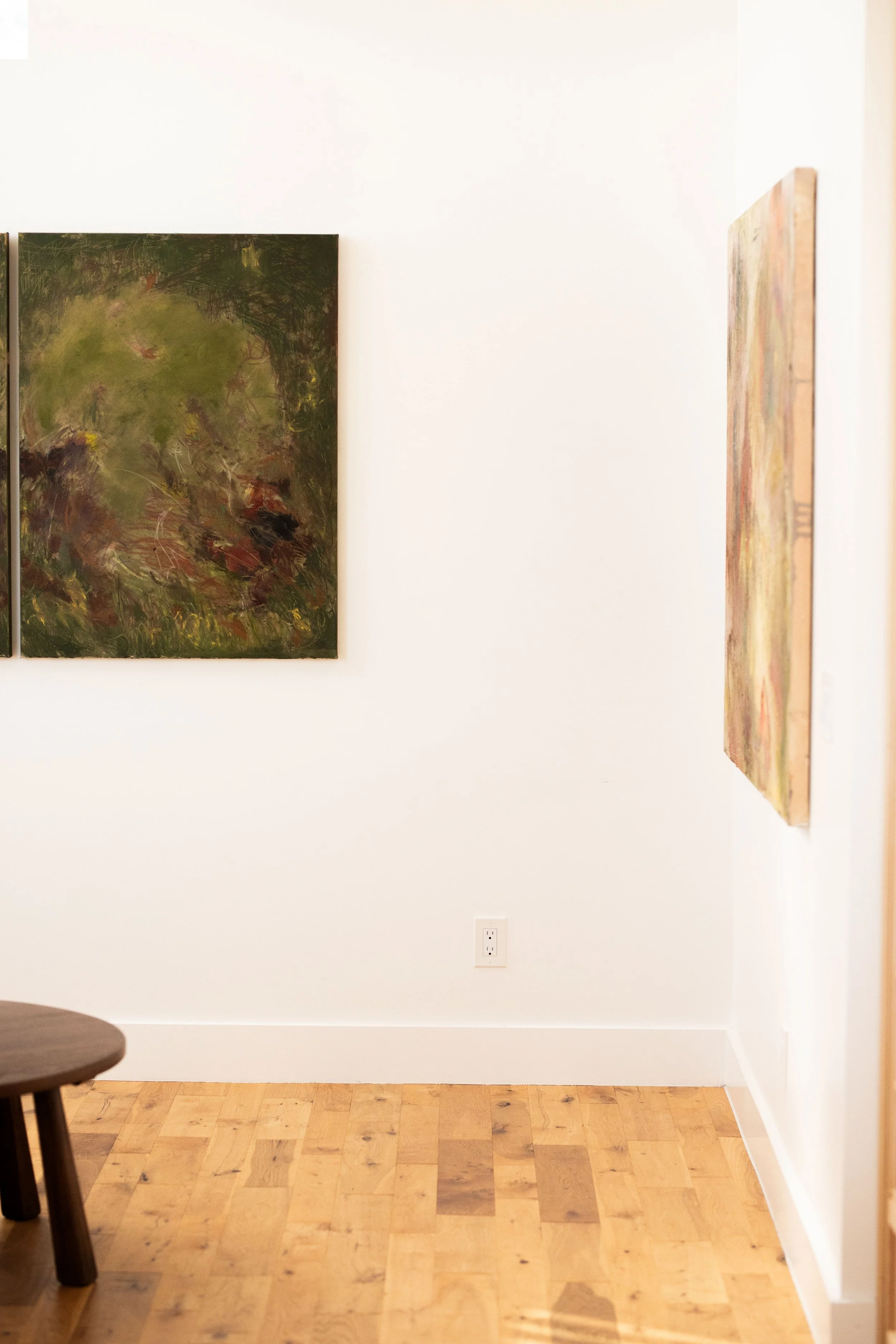
Within Enclosure, Mary Andrews approaches painting as the construction of interior space. Rather than depicting landscape, the works build environments through accumulated pigment, mark-making, and sedimented layers of color. Mossed greens, earthen reds, and bone-toned passages gather slowly across the surface, forming atmospheres that feel less like places observed than spaces entered.
The diptych Enclosure expands this inquiry by introducing the idea of containment as a generative condition. Each panel functions as a chamber within a shared field, suggesting an architecture that surrounds rather than confines. The enclosing structure is not defensive but attentive — a quiet perimeter within which perception can settle and reorganize.
Historically, enclosed spaces have served as sites of reflection: cloisters, caves, meditation rooms, gardens hidden behind walls. In this work, enclosure becomes a metaphor for the mind’s need to withdraw temporarily from the external world in order to recalibrate. The paintings invite the viewer into a suspended interior — a place where time slows and attention turns inward.
Enclosure marks a moment of stillness. The walls gather. The noise of the exterior world softens. What remains is a protected interior field — a chamber of quiet where thought, memory, and presence can settle into themselves.
For deeper reflections on the ideas, processes that shape each work, readers are invited to join Tullis Studio on Substack, where the studio shares extended essays, conversations, and ongoing documentation of the practice behind the paintings.