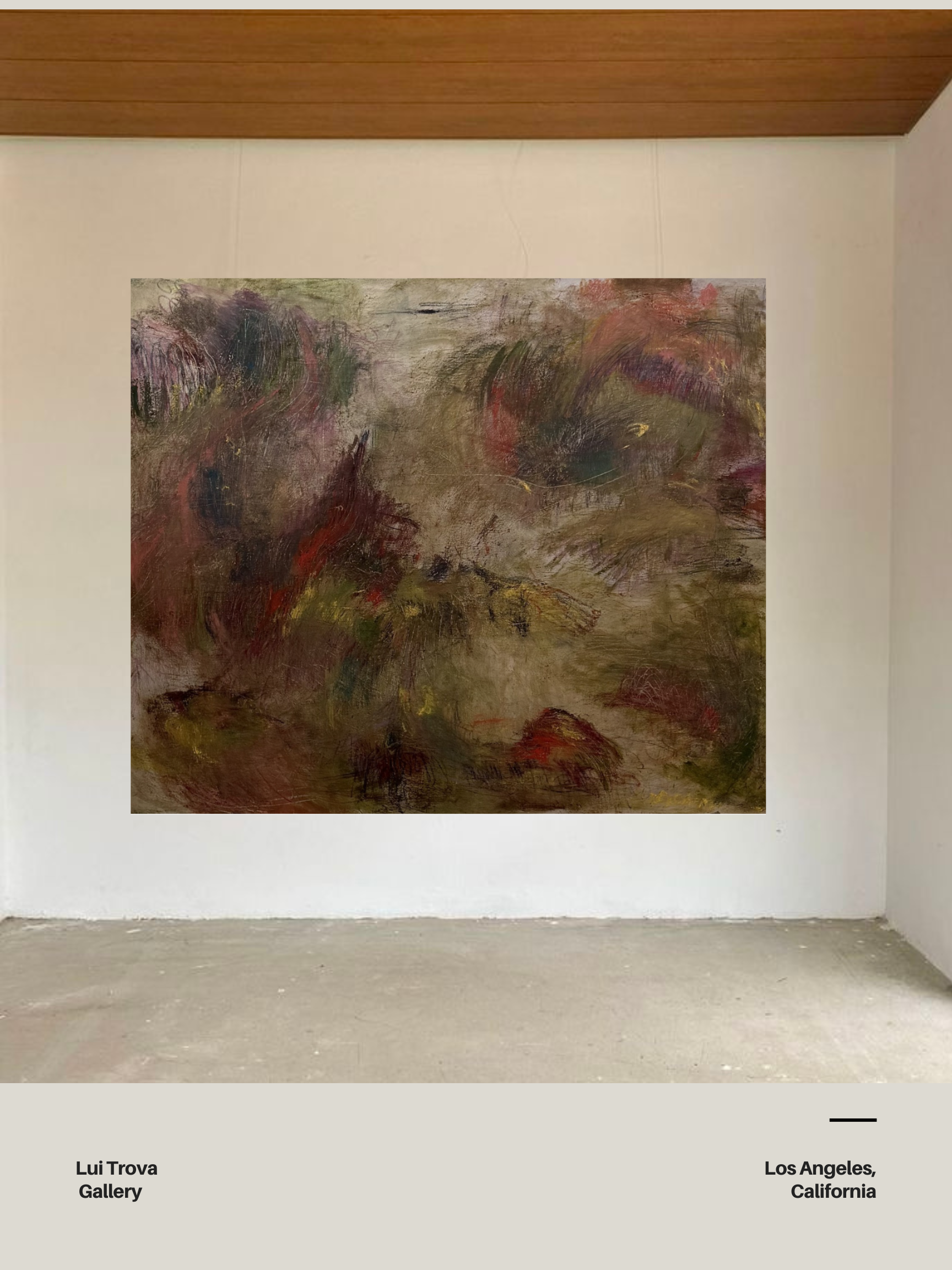
Tullis StudioTraces of Home
Artist: MARY ANDREWSOil, wax, pastel on canvasTraces of Home investigates the subtle relationship between memory and landscape. Drawing from specific locations across the artist’s childhood family property, the painting reflects the private geographies we construct within familiar environments—places that may appear ordinary to others but become deeply significant through lived experience. Rather than depicting the land in a literal sense, the work operates as an atmospheric record of remembered spaces: quiet clearings, edges of field, and sheltered pockets where solitude once took form.
Through layered gestures and muted mineral tones, the composition evokes fragments of terrain shaped as much by perception as by physical ground. The painting reflects on the ways individuals attach meaning to particular sites, suggesting that landscape is not only an external environment but also a psychological architecture formed through attention, ritual, and memory.
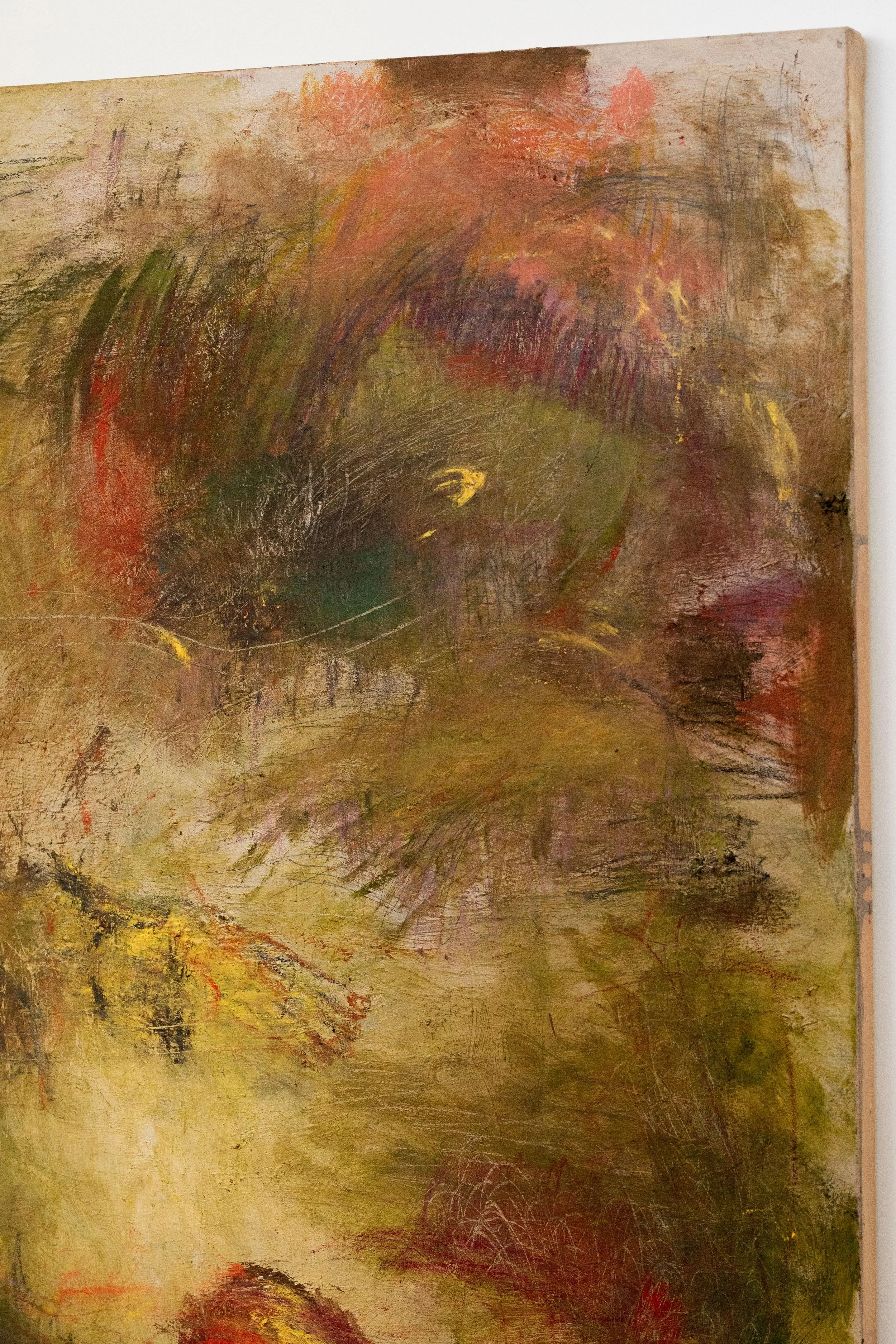
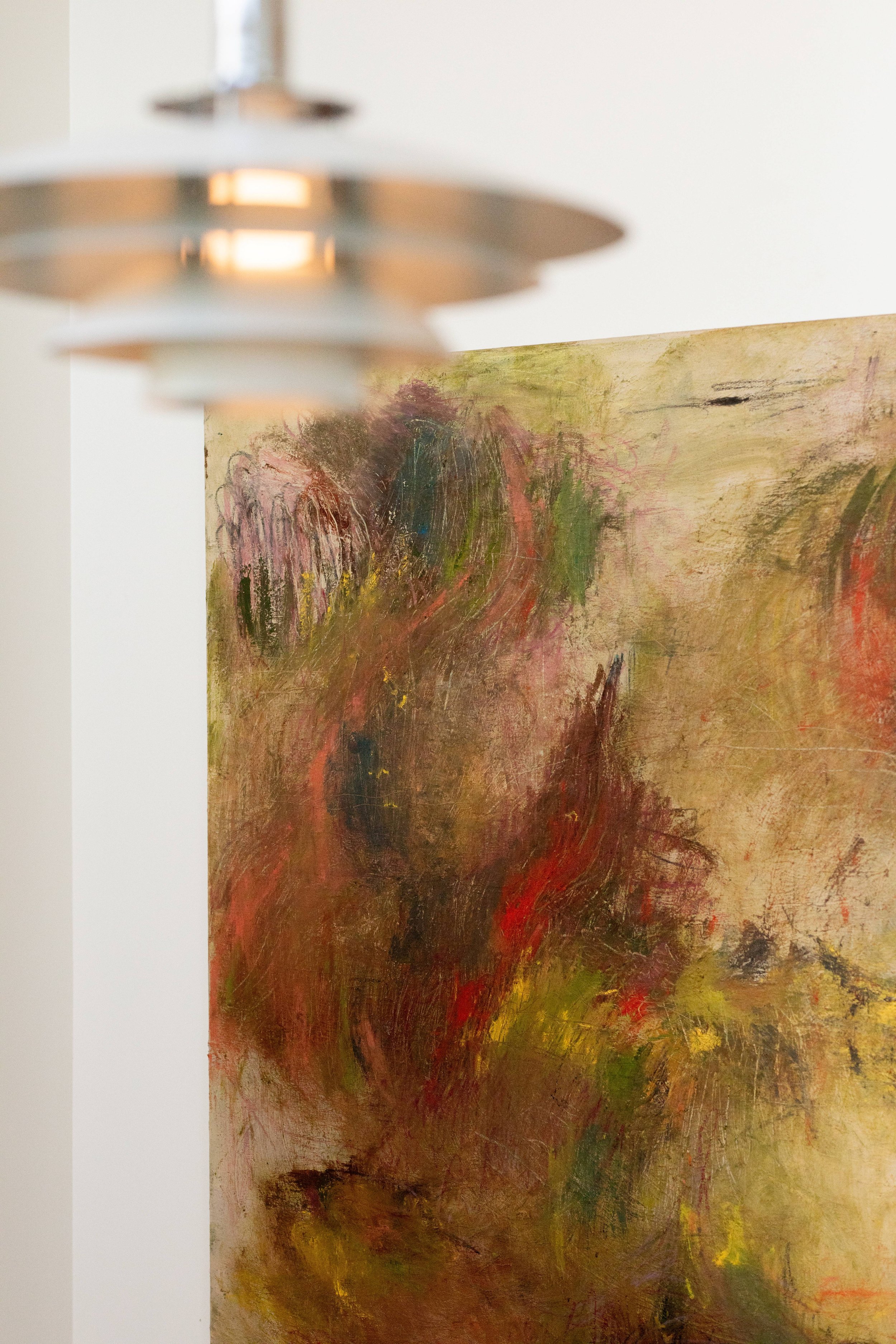
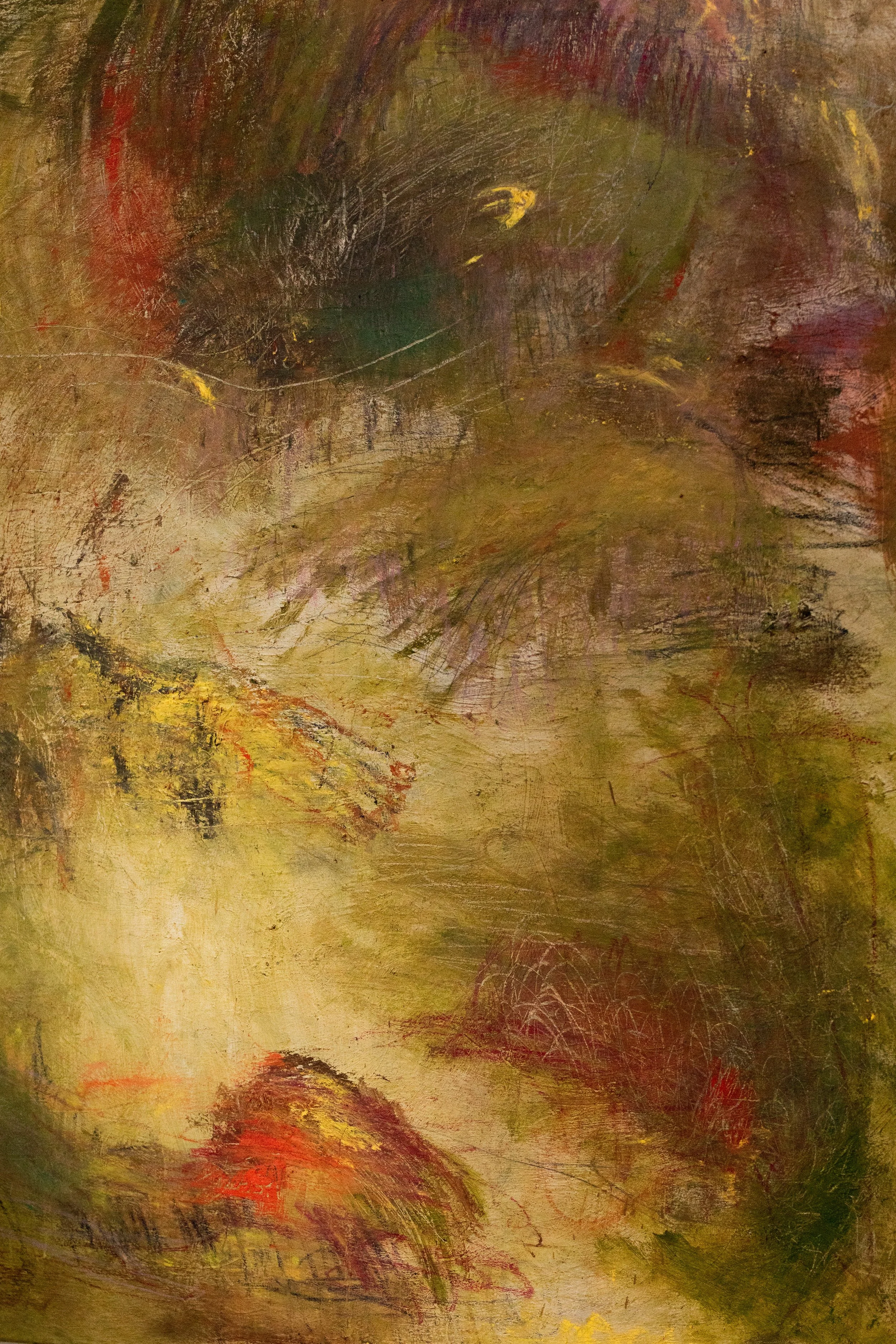
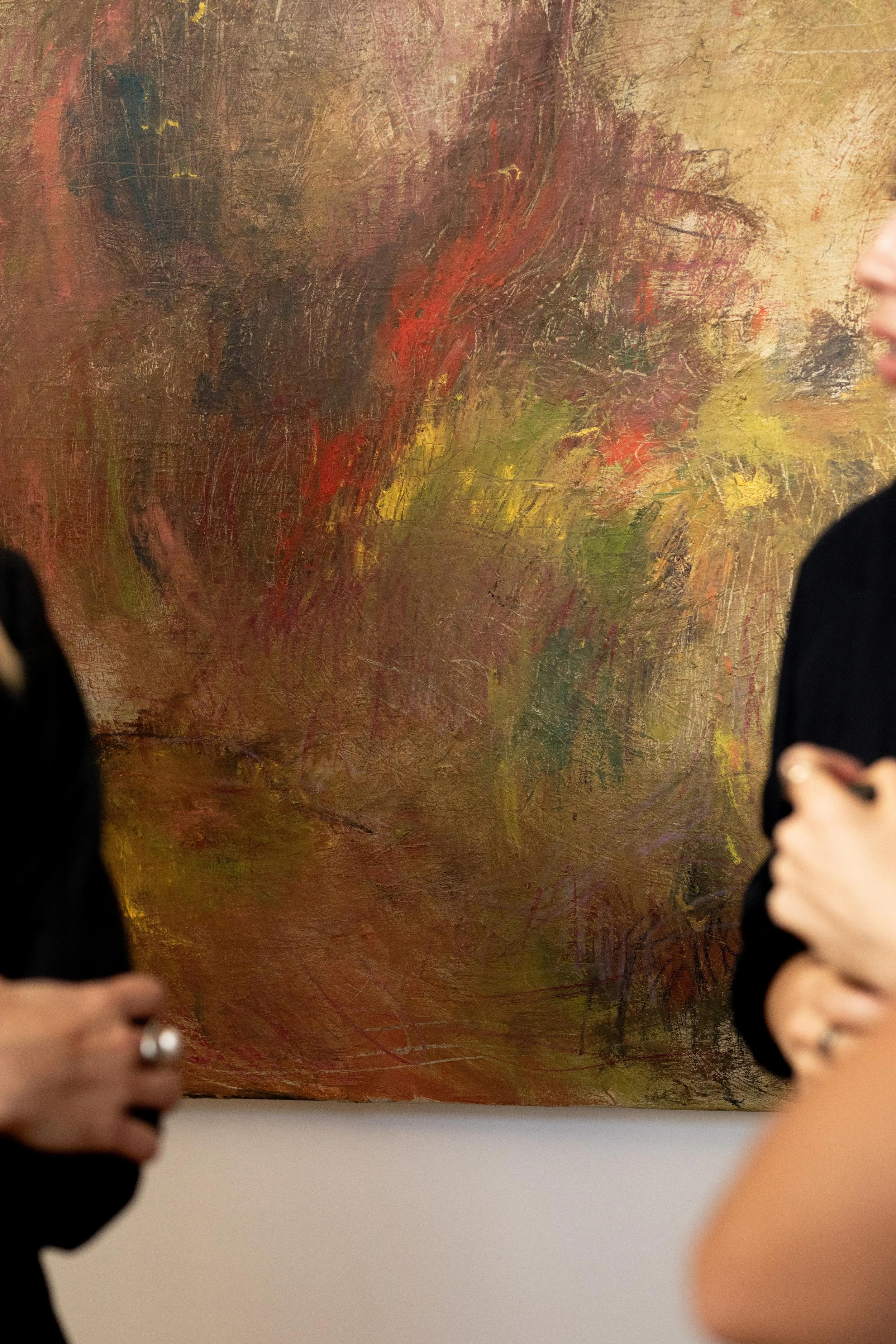
Title: Traces of Home
Artist: Mary Andrews
Oil, wax, pastel on canvas
2026
Traces of Home emerges from a deeply personal cartography. The work draws upon specific areas within the artist’s childhood landscape—discrete locations scattered across a twenty-acre property that became sites of retreat, contemplation, and quiet autonomy. These were places encountered not through formal designation but through repeated, solitary experience: small pockets of enclosure discovered within the terrain and gradually claimed through presence.
Rather than presenting a topographical rendering of the land, the painting operates as a layered metamorphic field. Brushwork accumulates in gestural passages that suggest fragments of vegetation, shifts in soil, and the atmospheric residue of place. The composition resists stable orientation, instead allowing memory to structure the terrain. What emerges is not a map but a psychological landscape in which multiple sites coexist within a single spatial field.
Central to the work is the question of how significance attaches itself to particular environments. The locations referenced in the painting are not traditionally monumental or visually exceptional. Their meaning arises through lived encounter—through the quiet rituals that unfolded there. As a child, the artist constructed small ephemeral altars within these spaces using found materials gathered from the land: fragments of eggshell, pine needles, wildflowers, stones, bones, and fossils. These informal shrines marked the sites as temporarily sacred, establishing an intimate dialogue between body and environment.
Within this context, Traces of Home explores the broader human impulse to indue landscape with personal meaning. A place becomes noteworthy not through inherent spectacle but through the experiences that unfold within it. Attention, repetition, and emotional presence transform otherwise ordinary ground into a site of significance.
The painting ultimately reflects on landscape as a reciprocal structure: the environment shapes interior life while interior life, in turn, reshapes how the environment is perceived and remembered. What remains is a layered terrain of memory—a record not of land alone, but of the quiet moments through which a sense of belonging first takes form.
For deeper reflections on the ideas, processes that shape each work, readers are invited to join Tullis Studio on Substack, where the studio shares extended essays, conversations, and ongoing documentation of the practice behind the paintings.